


The short answer
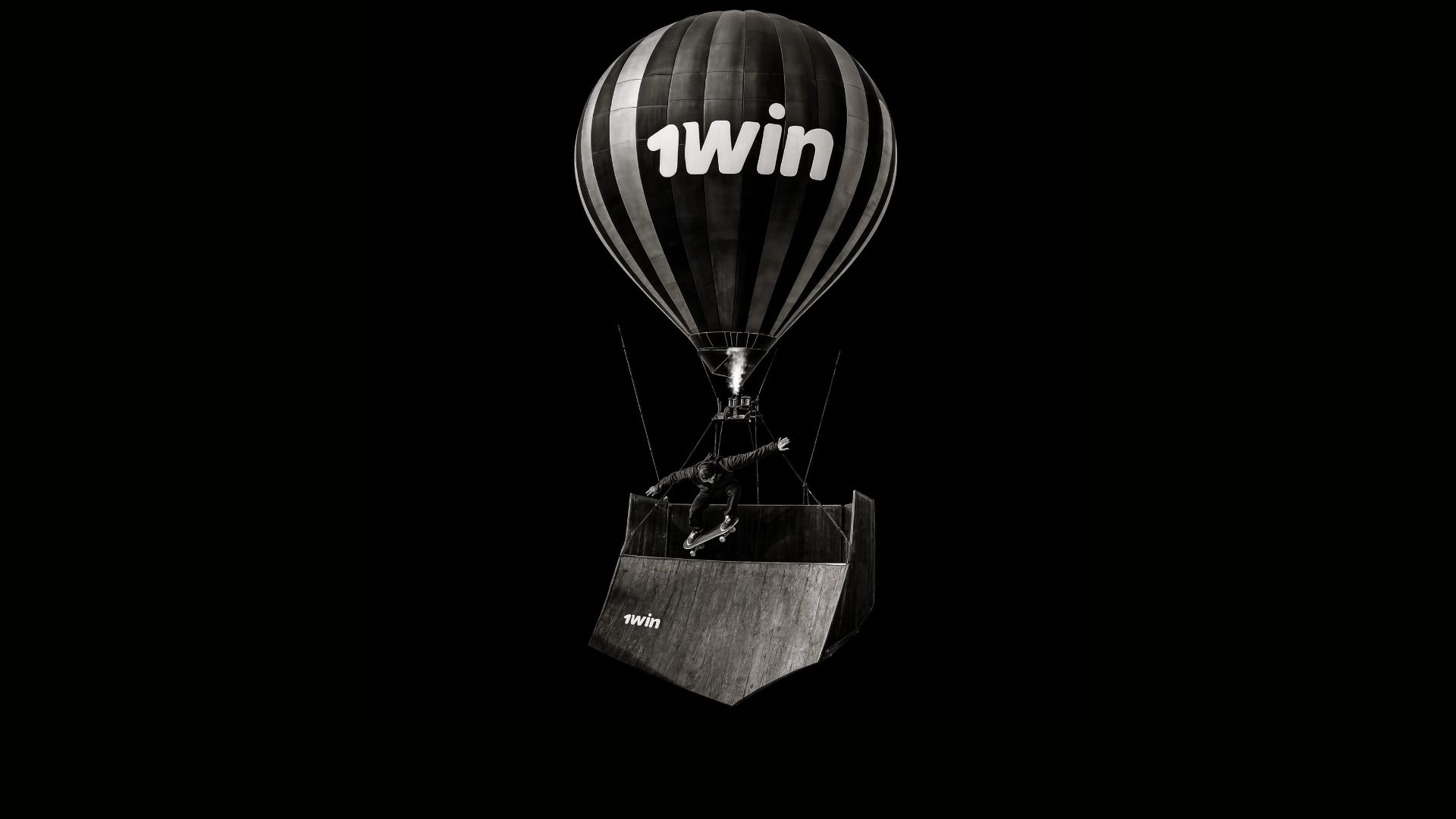
1win suspended a branded skate ramp beneath a hot air balloon at a stated 1,200 metres and had skateboarder Arman Kremer ride it in the air, publishing the footage through his own Instagram on 24 July 2026. It arrived a month after Stake flew a football pitch at 10,000 feet, and it is the clearest signal yet that 1win intends to compete with Stake on spectacle rather than concede the category.
- The stunt. A quarter pipe mounted on a railed platform hanging under a black 1win balloon, ridden solo, branded on the deck, the skirt and the envelope, filed under the recurring banner 1win Extreme.
- The numbers. Roughly 1.1 million views, 28,900 likes and 148 comments on Kremer's post. Smaller than Stake's reported figures, and unlike them, publicly visible on the post itself.
- The tactical difference. Stake built a three tonne pitch, flew six creators and published through brand channels. 1win built one ramp, flew one athlete and published through his account, which is the purer form of the same playbook.
- The honest caveat. 1win did not out-climb Stake. At 1,200 metres the ramp flew at roughly 39 percent of the pitch's altitude, and Stake's reported campaign reach is nearly two hundred times larger.
- The wider push. Suárez, Jon Jones, Gable Steveson, David Warner, Tyga and Ilia Topuria on the ambassador roster, the full Tundra Dota 2 roster signed in June, and an X ambassador programme opened in July.
A skate ramp is a heavy, awkward object. It wants to sit on flat concrete and it punishes anything that moves underneath it. 1win bolted one to a railed platform, hung it from a hot air balloon, sent a skater up with it and filmed him dropping in with nothing below the coping but a thousand metres of air and a lake. The brand's own campaign copy put the height at 1,200 metres and framed it with a line about having the courage to go further than anyone expects. Read that line again with a competitor in mind and it stops sounding like inspirational filler.
Because the timing is not an accident. In June, Stake flew a regulation-adjacent football pitch at 10,000 feet under a balloon, filled it with six extreme sports creators, and had them parachute off when the whistle blew. We pulled that campaign apart in detail at the time. Five weeks later, 1win put a different object under a different balloon and pushed it out through a different channel. In a category where nobody else is spending at this level on owned spectacle, two balloon stunts inside six weeks is not coincidence. It is a reply.
What follows breaks the 1win activation down on its own terms, sets it against the Stake campaign on the axes that actually matter rather than the ones that flatter either brand, looks at the global machine 1win has been assembling behind the spectacle, and closes on why this specific genre of marketing works on the human brain well enough to justify the cost.
Section 01
What 1win actually built
Strip the campaign to its physical components and it is simple, which is part of why it works. A quarter pipe with a plywood transition sits on a rectangular platform with a steel safety rail around three sides. The platform hangs on cables from a black hot air balloon carrying the 1win wordmark across the envelope at a size visible from the ground. The ramp deck carries the logo. The skirt below the platform carries the logo. The board itself carries the logo. There is no ambiguity about who paid for this.
The rider is Arman Kremer, and he is alone up there. He rolls in, works the transition on a platform that is very obviously moving, and finishes by holding the board over his head against an empty sky. The clip ends there. That is the entire film.
Kremer published it to his own Instagram on 24 July 2026 with a caption describing it as skateboarding under the world's largest hot air balloon, tagged #1win_extreme. The post is co-authored with two other accounts, which is how the reach compounds across collaborator audiences without any of them looking like a media buy. It landed 28,900 likes and 148 comments, and reached around 1.1 million views. The comment section is worth reading, because the replies are other athletes and balloon operators reacting to the difficulty rather than consumers reacting to a brand.
Figure 1. The 1win distribution route. The brand pays for the spectacle but never publishes it first, so the endorsement arrives inside a feed the viewer already opted into.
That last step is the whole strategy. A gambling brand posting a gambling stunt on a gambling account reaches people who already follow gambling accounts. An athlete posting a hard trick reaches everyone who follows skating, ballooning and extreme sport, and the 1win logo rides along on the balloon behind him. In most of 1win's core markets, the second route is also the only legal one.
Section 02
Balloon versus balloon: where 1win did it better
Let us handle the uncomfortable part first, because an honest comparison is more useful than a flattering one. On raw scale, 1win lost. Stake's pitch flew at 10,000 feet, or roughly 3,048 metres. The 1win ramp flew at a stated 1,200 metres, which is about 39 percent of that. Stake reported more than 200 million views across its wider campaign in the opening week against 1.1 million on the 1win reel. On altitude and on headline reach, this was not close.
Figure 2. Height comparison against the Red Bull Building Drop, the reference case for skate spectacle. 1win flew lower than Stake and far higher than the tallest ramp ever built on a building.
Now the axes where 1win came out ahead, and there are four of them.
Cost per unit of attention
Stake's activation required a 12 by 20 metre pitch weighing around 3,000 kilograms, a 60 minute flight rated to carry it, six creators, and a skydiving operation to get them all down. 1win needed one ramp, one platform, one balloon and one skater. We are not going to invent budget figures for either, but the production footprint of the second is a fraction of the first, and it still generated seven figures of views on a single post. Per dollar spent, the ramp almost certainly worked harder.
Numbers you can actually check
Stake's 200 million is self-reported, campaign-wide, blends social and earned media, and was flagged as difficult to verify by the trade press covering it. The 1win figure is a counter on a public post. It is far smaller and it is far more honest. For a brand trying to establish credibility against an incumbent, a verifiable million beats an unverifiable two hundred million, at least with the audience that checks.
Legible difficulty
This is the one most people miss. Six creators kicking a ball around on a flat surface is visually astonishing but athletically trivial. Anyone could do it. Dropping into a quarter pipe on a platform swinging under a balloon is a genuinely hard physical act, and the audience can tell, which is why the comments come from other athletes. Arousal transfer depends on the viewer's nervous system registering real risk. A football match at altitude is a set. A skate trick at altitude is a stunt.
A franchise instead of a one-off
Stake's campaign was bolted to a summer football tournament and expires with it. 1win filed this under 1win Extreme with a reusable hashtag, which means the next one costs less to launch because the format already has a name. That is how Red Bull built two decades of equity, and it is the more patient play.
| Axis | Stake, June 2026 | 1win, July 2026 | Edge |
|---|---|---|---|
| Altitude | 10,000 ft / 3,048 m | 1,200 m stated | Stake |
| Headline reach | 200M+ campaign, self-reported | 1.1M on one post, public | Stake |
| Verifiability | Blended, hard to audit | Visible counter on the post | 1win |
| Production footprint | 3,000 kg pitch, six creators, jump ops | One ramp, one skater | 1win |
| Athletic difficulty | Low, the setting carries it | High, the trick carries it | 1win |
| Publishing route | Brand channels first | Athlete's account first | 1win |
| Reusability | Tied to one tournament | Named recurring format | 1win |
| Proven scale behind it | $4.7B reported 2024 revenue | No comparable public figure | Stake |
Stake spent more to be seen by more people. 1win spent less to be believed by the right ones, and belief is the harder currency to buy.Crypto Casino Insiders
From the insider files
The full teardown of Stake's 10,000-foot football match→Section 03
The machine behind the balloon
A stunt only matters if there is something underneath it. This is where 1win's case as a genuine challenger gets stronger, because the spectacle is the visible layer of a distribution build that has been running for a while.
The company was founded in 2016 and operates out of Curaçao, with a footprint across Asia, Latin America and Africa. That geography is the strategic core of the whole thing. Stake grew by buying proximity to Western institutions, then spent 2025 exiting the UK and navigating advertising bans across most of Europe. 1win never fought for that ground. It built where crypto payments solve a real problem and where the regulatory ceiling is higher, and the product gets adapted per region rather than exported wholesale.
The ambassador roster
Luis Suárez. Jon Jones. Olympic champion and UFC fighter Gable Steveson. Cricketer David Warner, signed as global brand ambassador through P11 Group. Johnny Sins, which is a very deliberate signal about which audience they are actually talking to. In 2026 they added rapper Tyga and UFC champion Ilia Topuria to the VIP community. That is a roster assembled for footballing South America, cricketing South Asia, combat sports globally and internet culture everywhere, rather than for prestige in London.
Esports ownership, not sponsorship
In June 2026, 1win signed the entire Tundra Esports Dota 2 roster, players Pure, bzm, 33, Ari and Whitemon, plus coach MoonMeander, analyst degaz, manager Jamba and sports director SweetyPotz, to compete under the 1win Team tag. They also run their own tournament series. 1win Essence II ran from 30 July to 5 August 2026 with a 200,000 dollar prize pool and ten of the world's top Dota 2 teams. Owning the team and owning the tournament is a structurally different position from putting a logo on someone else's shirt.
Creators as infrastructure
On 23 July 2026, a day before the skate reel went live, 1win opened an X ambassador programme with three creator tracks coordinated through a dedicated Discord. It was picked up the same day by Decrypt, AMBCrypto, CryptoPotato, Crypto Daily and Tech Startups. Read that alongside the Kremer post and the intent is obvious: 1win is building a standing creator network so that the next stunt has a distribution layer waiting for it. Stake reached this position by paying Twitch streamers seven figures a month and eventually building Kick. 1win is trying to get there by recruiting the network directly.
The honest limit on all this: 1win publishes no revenue figure. Stake reported 4.7 billion dollars for 2024. Calling 1win the fastest growing operator at this level is a claim about visible momentum, not about audited numbers, and anyone repeating it should say so. Third-party reviews also flag regulator warnings covering the UK, the Netherlands, Ukraine and Russia, alongside a recurring complaint pattern around withdrawals delayed while bonuses are active and KYC requests arriving late in the customer lifecycle. A balloon does not fix a withdrawal queue. Those are separate questions and they stay open.
Section 04
Why this genre of marketing works
Gambling brands do not spend on aerial skate ramps because executives find them fun. They spend because the mechanism is well understood and because most cheaper mechanisms are closed to them.
Risk the body can read
Watching genuine physical danger produces measurable physiological arousal: heart rate rises, attention narrows, adrenaline moves. That arousal does not arrive labelled, and some of it attaches to whatever is present in the frame. In the 1win clip, what is present in the frame is a balloon with the wordmark on it, filling the sky behind the rider. The transfer is not subtle, but it does not need to be, because the viewer is not evaluating a brand while it happens. They are watching a man on a swinging ramp.
Memory encoding through arousal
Emotionally charged content is stored more durably than neutral content. A logo attached to a moment that made someone's stomach drop is not merely seen, it is filed with the feeling still attached. This is why one aerial stunt can outperform a year of banner placements for recall, and why the brands with the deepest pockets in restricted categories keep choosing spectacle over frequency.
The parasocial shortcut
This is where the creator-first route earns its keep, and where 1win improved on Stake's execution rather than merely copying it. When a brand publishes its own film, the viewer processes it as advertising and raises the appropriate defences. When someone they already follow publishes the same footage, it arrives through an existing relationship. The trust the audience has in Kremer partially extends to the logo behind him, at no additional cost. Stake spent a reported 100 million dollars a year on Drake to buy roughly this effect at industrial scale. 1win rented a version of it for the price of a balloon flight.
Identity, and the regulatory dodge underneath it
Extreme sport carries a set of cultural signals: nerve, self-possession, doing the thing other people said was impossible. Brands that associate with those signals become a way for the audience to express that identity. 1win's campaign line leans directly on this, and the marketing lesson is old. Red Bull never sold caffeine, it sold the person you imagine yourself to be while drinking it.
There is also a colder reason. Crypto casinos cannot advertise conventionally in most major regulated markets. A film of a skater on a suspended ramp is not a gambling advertisement in any obvious sense, and it travels through feeds, group chats and aggregator accounts carried by people who share it voluntarily. Branded entertainment is not only more effective than display advertising for this category. In much of the world it is the only channel that remains open, and that constraint, more than any creative ambition, is why both of these balloons went up.
Keep reading
1win Extreme campaign FAQ
What was the 1win skateboarding stunt?
Is the 1win ramp higher than Stake's balloon football pitch?
Which stunt actually got more reach?
Who is Arman Kremer?
Is 1win really challenging Stake?
What are the risks around 1win that this campaign does not address?
Campaign engagement figures are taken from publicly visible post counters and from the operators' own communications, and reach numbers reported by operators are difficult to verify independently. The 1,200 metre altitude is 1win's stated figure. Revenue, licensing and complaint details reflect public reporting as of August 2026 and may change. This article analyses marketing strategy and is not an endorsement of any operator. Not financial advice. 18+, gamble responsibly.