


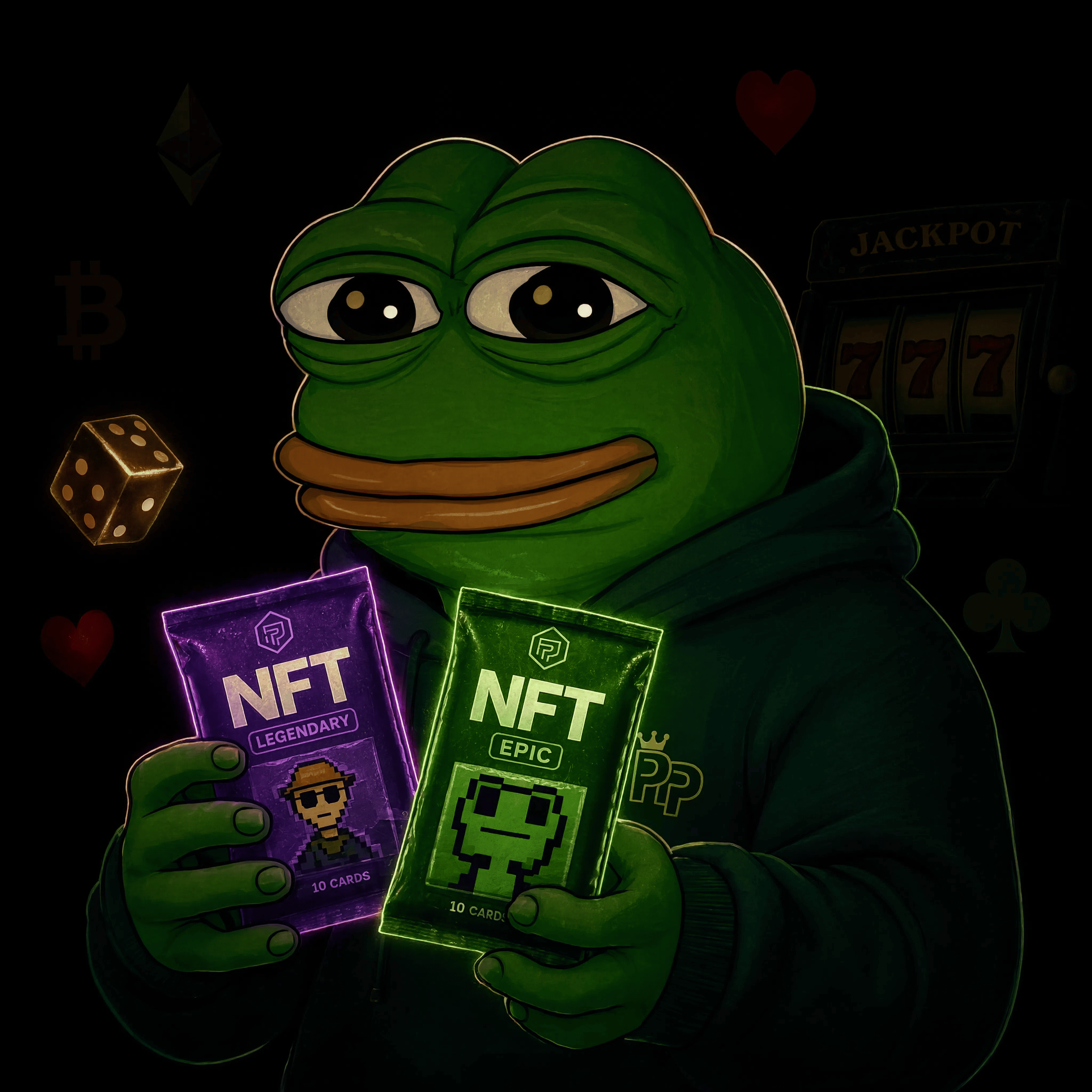

The marketplace is the most underrated machine in crypto gambling — because it runs on the same reward circuitry as the games themselves.
The short answer
NFT marketplaces are the connective tissue of the crypto casino economy — the venue where prizes, loyalty assets, and collectibles become liquid, tradable value. They matter because they pair real digital ownership with the same uncertainty-driven reward system that makes gambling compelling, turning collecting itself into a form of entertainment.
- NFT marketplaces are the liquidity layer that turns a crypto casino's prizes, loyalty rewards, and collectibles into tradable value rather than dormant pictures.
- Collecting and gambling run on the same dopamine system — the brain's reward signal peaks under uncertainty, not after a guaranteed outcome.
- Randomized minting and volatile floor prices recreate the variable-ratio reinforcement schedule that powers slot machines and loot boxes.
- Collectors are not one audience: utility seekers, speculators, status-seekers, and aesthetes each respond to different marketplace mechanics.
Walk through any serious crypto casino and the slot reels, the dice, and the card tables get all the attention. But the component quietly doing the heaviest lifting is rarely a game at all. It's the marketplace — the layer where a player's winnings, badges, jackpots, and collectibles stop being decorations and become assets that can be priced, traded, and chased. Strip the marketplace out and a casino's NFTs are just JPEGs. Bolt it back on and they become a second economy with its own players, its own speculation, and its own pull on the brain.
That pull is the part the industry tends to underplay. NFT marketplaces are usually sold as infrastructure — wallets, royalties, secondary sales. The more interesting story is psychological. The act of acquiring, holding, and flipping a scarce digital object recruits the same neural reward circuitry that makes a spinning reel hard to walk away from. In other words, a marketplace is not a neutral storefront attached to the casino. It is itself a form of entertainment, engineered around uncertainty.
This piece breaks down both halves: why NFT marketplaces are structurally essential to the crypto casino ecosystem, and what decades of neuroscience and behavioral research actually say about why collecting digital scarcity is so compelling — and where it shades into the psychology of gambling.
The marketplace is the casino's second economy
In a traditional online casino, value flows one direction: chips in, occasional payout out, and the rest evaporates into the house edge. NFT marketplaces break that linearity. They give a casino's digital items an afterlife. A jackpot trophy, a season-pass badge, a tournament memento, or a prize NFT won at the tables can all be resold, collected, or displayed — which means the moment of winning is no longer the end of the loop. It's the start of a new one.
For operators, that matters across several dimensions at once:
- Liquidity and price discovery, because a marketplace turns "you won a rare item" into "you own something with a live floor price the whole community can see."
- Retention, because holders return to track value, complete sets, and trade — engagement that has nothing to do with placing another bet, yet keeps players inside the ecosystem.
- Identity and status, because a public wallet is a trophy case, and rarity becomes a social signal among peers.
- Sovereignty, because on-chain ownership and transferability fit naturally with the privacy-forward, self-custody ethos of no-KYC casinos, where assets move without a gatekeeper.
The same logic extends to skill games. The rise of the on-chain poker phenomenon shows how marketplaces can wrap competitive play in tradable collectibles — seats, trophies, and provably scarce memorabilia — that accrue meaning and value the longer a community exists. The marketplace, in short, is where a casino's culture gets stored.
If the terms above are unfamiliar, start with the fundamentals before going deeper on the psychology.
Collecting is a reward circuit, not just a hobby
To understand why a marketplace is so sticky, you have to start with dopamine — and correct a common misconception about it. Dopamine is not the brain's "pleasure chemical." It is closer to a teaching and motivation signal. The most influential account comes from Cambridge neuroscientist Wolfram Schultz, whose recordings of midbrain dopamine neurons showed that they fire according to a reward prediction error: they spike when an outcome is better than expected, stay flat when a reward arrives exactly as predicted, and dip below baseline when an expected reward fails to appear.
The practical consequence is profound. A fully predictable reward barely moves the needle. It's the surprise — the better-than-expected outcome — that drives the strongest dopaminergic response and, with it, the learning that says do that again. A guaranteed purchase from a fixed-price shop is psychologically inert. A mint with an unknown result, a drop where rarity is revealed after the fact, or a floor price that could lurch in either direction overnight is exactly the kind of uncertain reward the system evolved to chase.
Researchers also distinguish between "wanting" and "liking." The work of Kent Berridge and Terry Robinson on incentive salience shows that the craving to pursue a reward is governed by a partly separate system from the pleasure of obtaining it — and that "wanting" can grow even as "liking" fades. That dissociation is the engine behind a familiar collector experience: the hunt feels more electric than the having, and the next acquisition always promises more than the last one delivered.
Why uncertainty is the active ingredient
The single most important finding for anyone building or studying NFT marketplaces is this: dopamine responses are not just larger for surprises — they are sustained and maximal when outcomes are maximally uncertain. In experiments by Schultz and colleagues, dopamine neuron activity rose as the probability of reward approached a coin-flip, peaking where the result was least predictable. Reviews of gambling disorder point to exactly this sustained uncertainty signal to explain why people keep playing through losses: the in-between state of "maybe" is itself rewarding.
This is the same machinery that behavioral scientists call a variable-ratio reinforcement schedule — a concept dating to Ferster and Skinner's mid-century work. When rewards arrive after an unpredictable number of attempts, behavior becomes unusually persistent and resistant to extinction. It is the schedule built into slot machines, and it is the schedule built into randomized digital rewards.
The cleanest modern evidence comes from research on video game loot boxes. In a large-scale survey of more than seven thousand players, David Zendle and Paul Cairns found that the more people spent on randomized loot boxes, the more severe their problem-gambling scores — an association larger than the link between problem gambling and several established risk factors, and one that replicated across follow-up studies. Later laboratory work showed that rare loot-box rewards produce bigger physiological arousal and a stronger urge to open more, mirroring how slot players react to rare big wins. A blind NFT mint, a randomized trait reveal, or a "pack" of unknown collectibles is structurally the same object.
The marketplace isn't a feature bolted onto the casino — it's a second casino, where the game is acquisition and the jackpot is a rarer version of what you already own.
The digital brain versus the shelf
So is collecting an NFT any different, neurologically, from collecting baseball cards or rare wine? The honest answer is that the core circuitry is identical — acquisition, scarcity, and the thrill of the hunt activate the same reward pathways whether the object is physical or on-chain. Ownership itself amplifies value through the well-documented endowment effect: people price things higher the moment they own them. Research framing NFTs as a new class of "digital luxury collectibles" captures how naturally they slot into age-old collecting behavior.
What's different is not the brain — it's the environment the marketplace wraps around it. A physical shelf has friction: collectibles are slow to sell, hard to authenticate, and limited by geography. An NFT marketplace removes that friction and adds accelerants. Scarcity is cryptographically provable and visible to everyone. Liquidity is instant and global, 24 hours a day. And crucially, the acquisition step is often randomized — minting and blind drops graft a slot-machine reward schedule onto an activity that, on a physical shelf, would be a deliberate, predictable purchase.
| Mechanic | Physical collectible | NFT marketplace | Slot machine / EGM | NFT verdict |
|---|---|---|---|---|
| Liquidity | Slow, illiquid, local resale | Instant, global, 24/7 | Stake only; no resale | Amplified |
| Scarcity signal | Hard to verify, forgeable | Cryptographic, public | Fixed published odds | Transparent |
| Reward timing | Predictable purchase | Randomized mint / blind drop | Variable-ratio payout | Gambling-like |
| Core motive | Ownership, identity | Ownership + speculation | Monetary win | Mixed |
Marketplace versus casino floor: where the psychology diverges
It would be too neat to say NFT collecting simply is gambling. The research describes overlap, not identity. On the overlap side, the evidence is hard to ignore. Studies of cryptocurrency traders consistently find elevated rates of problem gambling: one 2025 survey of 700 crypto traders classified roughly a third as problematic gamblers, with similar shares at-risk, and identified specific gambling motives and cognitive distortions as predictors. A scoping review reached a related conclusion — crypto traders tend to share demographics and personality traits with both high-risk stock traders and problem gamblers. Longitudinal work on loot boxes has even documented a migration pathway, where randomized digital rewards precede the uptake of conventional gambling.
But collecting also carries motives that gambling lacks entirely. A pure bet has no afterlife and no aesthetic; the chip is gone the instant the wheel stops. An NFT persists. It can be displayed, it confers identity and community membership, and it can be genuinely appreciated as an object. Those anchors — meaning, belonging, taste — are why a marketplace can be entertainment in a way a roulette wheel cannot, and why many collectors never approach problematic territory at all.
Who actually collects
Collectors are not a monolith, and treating them as one is where most analysis goes wrong. A segmentation study of 703 NFT buyers found at least five distinct groups: utility-driven buyers (about 35%), tech-savvy investors (about 29%), curious speculators (about 18%), status-seeking socializers (about 13%), and cautious investors (about 5%). Only some of these are chasing the speculative thrill; others are motivated by community, identity, or the technology itself.
Personality research adds texture. A large Big Five study of collectors found that high openness paired with low neuroticism predicts owning collectibles, while "investor-collectors" tended toward low agreeableness and conscientiousness — a more competitive, spontaneous profile. Separate work on NFT owners specifically found that risk-taking and investment knowledge predicted pragmatic "utilizer" collectors, whereas impulsivity (and lower financial literacy) predicted the more aesthetically driven buyers most exposed to hype. Demographically, surveys show NFT collectors skew male and millennial, with millennials far more likely than Gen Z to trade them — and, as in most crypto markets, a small minority of "whale" wallets controls the large majority of total value.
The responsible-play reality
For operators, the takeaway is not to manufacture compulsion — it is to recognize that the marketplace's reward architecture is powerful enough to require care. The features that make collecting fun (uncertainty, scarcity, instant liquidity) are the same ones the gambling literature flags as risk-amplifying. Transparent odds on randomized mints, spending visibility, and genuine off-ramps for the collectors who only want utility or art are not regulatory boxes to tick; they are what separates a durable ecosystem from a churn-and-burn one. Crypto gambling carries real risk of harm, and the honest version of this story keeps that in frame.
What this means for operators and builders
The marketplace is the retention engine, not the merch table. Treating it as an afterthought wastes its single biggest advantage: it converts one-time wins into ongoing reasons to return. Liquidity and visible price discovery are features, not nice-to-haves.
Uncertainty is the product — design it deliberately. The same variable-ratio mechanics that drive engagement are the ones that drive harm. Building them with transparency and guardrails is both the ethical and the commercially durable choice.
Segment, or misfire. A drop tuned for speculators will alienate the utility and aesthetic majority; a static gallery will bore the speculators. The five-segment reality means one marketplace has to serve several psychologies at once.
NFT marketplaces sit at the exact intersection of two of the most powerful behavioral forces we know of: the human drive to collect and the human pull toward uncertain reward. That's why they are the most important layer of the crypto casino stack — and why understanding the science behind them is no longer optional for anyone building in this space. The operators who treat the marketplace as a psychology problem, not just an engineering one, are the ones who will still be standing when the hype cycles pass.